

Executive Function Educator Training
Executive Function Educator Training
This series of five sessions (each three hours long) fosters self-regulation, successful task completion, and independence in students.
You can register for individual sessions or the entire series of five sessions at a discount.
Educators are provided with a combination of theoretical approaches and practical strategies for supporting students with executive function (EF) challenges.
Executive Function Educator Training offers interactive practice, strategies and take-home templates that will empower you to guide your students to regulate their behaviour and emotions, reflect on their thinking processes and develop learning strategies that enable them to reach their goals to succeed at school and in life.
Note: Our workshop series also offers access to three follow-up sessions to support classroom implementation over the course of a year from your completion date.
Fall 2026 Series: Sessions will be held online via Zoom on Thursday evenings (5:00 to 8:00pm).
- November 12 – Session 1: Promoting Understanding of Executive Function
- November 19 – Session 2: Promoting Self-Awareness
- November 26 – Session 3: Promoting Cognitive Flexibility
- December 3 – Session 4: Promoting Planning and Prioritizing
- December 10 – Session 5: Promoting Organization and Working Memory
Spring 2027 Series: Sessions will be held online via Zoom on Thursday evenings (5:00 to 8:00pm).
- February 11, 2027 – Session 1: Promoting Understanding of Executive Function
- February 18, 2027 – Session 2: Promoting Self-Awareness
- February 25, 2027 – Session 3: Promoting Cognitive Flexibility
- March 4, 2027 – Session 4: Promoting Planning and Prioritizing
- March 11, 2027 – Session 5: Promoting Organization and Working Memory
Who: This course is intended for practicing educators such as teachers and tutors
Prerequisites: N/A
Session Cost: $150 per session
Series Cost: $675 (for all five sessions)
Application deadline is one week prior to start date
If you have any questions, please contact ProD@fraseracademy.ca.
Session 1
Session 1: Promoting Understanding of Executive Function
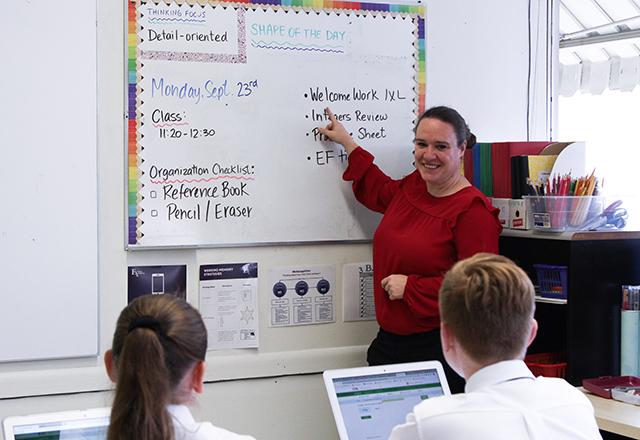
Did you ever wonder how to help a student who rarely completes homework, does everything at the last minute and does not seem to be working at their intellectual level? Contrary to common belief, students with executive function challenges do not choose to behave this way. Rather, “Kids do well if they can” (Greene, 2009), and it is our responsibility as educators to find out what is in the way and show them how to move through it. This workshop will delve into what lays behind executive function challenges and what you can do to help students change these patterns. You will leave with a strong understanding of EF skills and how to cultivate an EF culture in your classroom.
Participants will learn to:
- Explore what executive function skills are and why they matter
- Understand the Fraser Academy EF model of skills development
- Recognize when students are struggling with EF skills in the classroom
- Apply a framework to promote an EF culture in the classroom
- Experience activities that promote an understanding of EF skills in yourself and others

Session 2
Session 2: Promoting Self-Awareness
Why is it that some of your students talk before they think, make the same mistakes over and over, or make poor social choices? Many students lack the ability to regulate these behaviours largely because of challenges with the executive function areas of self awareness and self-reflection. Self-awareness is a crucial skill for managing oneself in the world as it relates to thinking and learning. This workshop provides the theory and practical strategies for helping students achieve greater self-awareness so that they can address these EF challenges and become more effective, confident learners. Simple tools and strategies are introduced for helping individuals recognize their own strengths and stretches, and apply them to learning and life.
Participants will learn to:
- Explore how self-awareness can impact the building blocks of learning
- Understand the metacognitive process and how to use it effectively in the classroom
- Work with practical tools and strategies to cultivate a stronger understanding of self
- Apply some basic tools to promote students leading from a place of strength
- Implement ready-to-use self-awareness classroom activities
Session 3
Session 3: Promoting Cognitive Flexibility
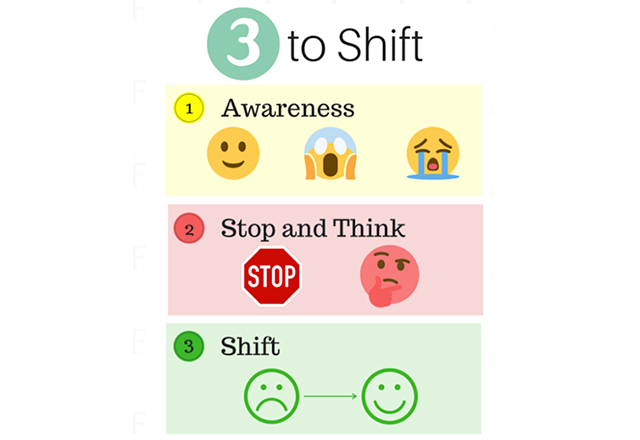
Flexibility and adaptability are skills fundamental to navigating and flourishing in learning, life and work. Cognitive flexibility is the process of learning to navigate challenging decisions, projects, emotions and behaviours without getting stuck in order to flourish. This session provides an understanding of the science behind self-regulation, and identifies strategies and techniques to build these skills in the classroom. Participants will learn to spot signs of distress and how to manage tricky situations when their students are struggling mentally and/or emotionally. Cognitive strategies are introduced for helping children to cope in real-time.
Participants will learn to:
- Explore the different facets of cognitive flexibility as it relates to self-regulation of emotions and behaviours, as well as learning and decision making
- Work with practical frameworks to support students to manage work when they are feeling stuck or stressed
- Apply the ABC model to reframe patterns of behaviour
- Learn practical reframes, tools and strategies for judging judgments that can lead to overwhelming feelings

Session 4
Session 4: Promoting Planning and Prioritizing
At times, our students find it tricky to keep track of due dates, forget to record their homework or struggle to hand in work on time. This is a common dilemma amongst educators. Many students lack the ability to plan, prioritize and manage their time effectively to meet their academic responsibilities. What often looks like apathy or laziness can actually be challenges in executive functions in the areas of planning, prioritizing, organizing and time management.
This session provides the theory and practical strategies needed to support students so they can complete their work on time, leading to greater self-esteem, self-efficacy and independence.
Participants will learn to:
- Understand why planning and prioritizing are tricky skills for kids to master
- Practice a three step approach to planning and prioritizing for task completion
- Apply a colour coded system to create a visual plan for tackling assignments
- Work with new frameworks for creating meaningful goals

Session 5
Session 5: Promoting Organization and Working Memory
Working memory is an essential component of learning as it allows us to process information by holding it on our mental sketch pad to manipulate it. This allows us to complete complex projects and follow directions with relative ease. Without it, our students have trouble initiating and completing tasks. They may also forget what they were doing part way through a problem. This challenge can be further exacerbated by struggling with organization. Organization can be visible items, such as materials needed to complete a task, or invisible, such as organizing ideas and concepts to complete assignments successfully.
This session will provide an understanding of the impact working memory and organization has on students. You will be provided with practical strategies to support students developing the skills needed to get organized and work through important projects with confidence.
Participants will learn to:
- Understand how struggles in working memory and organization impact learning
- Apply strategies to support students in following complex instructions and managing multi-step projects
- Practice a simple approach to organizing materials for learning and life
- Work with practical tools to organize thoughts and concepts methodically
Thank you so much for your time, efforts, sharing of knowledge and expertise today. Your workshop was amazing, and I plan to use many of the strategies shared. I hope to start implementing it immediately.
Kelley F., St. George's School TeacherAbout the Trainer

Nicola Lott, M.Ed.
Acting Director, FAx
Nicola Lott is the Acting Director of FAx, Fraser Academy’s Outreach Centre. She holds a Master of Special Education, and is an accredited Structured Literacy Interventionist and Orton-Gillingham Supervisor. Nicola is Level B assessment certified and has completed advanced training in data-based intervention, screening, and progress-monitoring systems. She has trained teachers and school districts across North America in implementing assessment-driven literacy frameworks, focusing on applying evidence-based assessment and MTSS practices within the Canadian educational context.